Biography
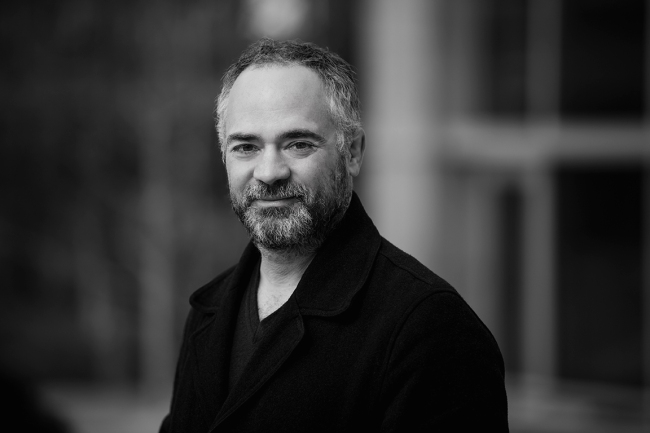
I was born in Calgary and studied Microbiology and English at the University of Calgary. I was also a member of the University of Calgary Wrestling Team. I graduated in 1997 with a pair of degrees (a BA and BSc).
Later that year, I traveled to West Africa with a volunteer organization and taught biology in a Ghanaian village for three months. When my volunteer placement was complete, I wandered through western and northern Africa for nine months. My stories from Africa resulted in my first book, Harmattan: Wind Across West Africa. This won the Henry Kriesel Award for Best First Book.
In December 1999, hot with millennium-fever, I traveled to Jerusalem to watch the clock turn on 2000. I wandered throughout Israel and Egypt before returning to Calgary to begin a career as a freelance writer. Since then, I’ve published articles in numerous magazines and literary journals including Afar, The Walrus, EnRoute, Geist and Reader’s Digest Canada.
I traveled to Iran in the summer of 2003 seeking the connection between Persian poets and traditional wrestlers. This trip, and a subsequent return to the country the following year, yielded the stories that make up my travel memoir Poets and Pahlevans: A Journey Into the Heart of Iran. Knopf Canada published Poets and Pahlevans in 2006. The book won the Wilfred Eggleston Prize for Best Nonfiction at the Alberta Book Awards and was nominated for the Edna Staebler Award.
My last project was a book about walls, fences and other ‘hard’ barriers – and the people who live in their shadows – called Walls; Travels Along the Barricades. For this book, I visited walls and fences in Algeria, Morocco, the Spanish enclaves of Ceuta and Melilla, Israel, Palestine, India, Cyprus, Montreal, Belfast and along the US-Mexico border. Walls won the 2013 Shaughnessy Cohen Prize for Political Writing, among a few other awards, and has been published in Canada (both in English and French), the US, the UK and Bulgaria.
Pay No Heed to the Rockets: Palestine in the Present Tense revealed life in contemporary Palestine through the lens of Palestinian literary culture.
My newest book, Driven: The Secret Life of Taxi Drivers, explores the fascinating lives of the men and women who drive us around.
I live in Calgary with my eleven year-old son, Amedeo.

 Elsewhere
Hi Marcello:
I am a Calgary-based freelance magazine writer and just got back from a related conference in Chicago. One of the magazines featured was Afar (www.afar.com). You probably know it; it is all about cultures versus destinations. I can definitely see you writing for this U.S. publication. FYI and if you are interested, the editor who presented is Jennica Peterson — Jennica@afar.com.
Good luck with Walls.
Colleen
Marcello,
My name is Cam Christiansen from Calgary. I was talking to Rob who I believe is related to you? Anyway he was telling me about your Wall project. I am an animator/filmmaker and am coincidentally working on a project about the Wall Israel West Bank etc.. It is for the National Film Board.
Anyway would be interested in hearing more about your project. I am going to Israel in a week so maybe after ?
Sorry my site is.. http://anlandastudio.ning.com/page/our-films
Marcello
I was at your reading this evening and wanted to say how much I enjoyed your work. It seemed to me to capture the beauty in the male family relationship brother, father and son while including the parts that weren’t always beautiful. I had hoped to speak with you but there wasn’t an opportunity. Would it be possible to talk about your writing?
Thanks for your comment on my little prose about Ceuta and Mellila. Your work sounds fascinating. I will watch with interest for Walls. Always love to read Canadian authors and the subject is intriguing.
Lenora
Thanks for the comment, Lenora. If you are interested, you can find my dispatches from Ceuta and Melilla in the archives of this blog. Go to May 2008 and you will find them there.
Marcello,
I was recently reading Afar magazine in an airport and noticed your lovely piece on the last page. I have a strange habit of reading all magazines from the back to the front, so it wasn’t until I made my way to your bio that I realized you reside in Calgary – my current city of habitation. Quel coincidence!
My husband and I have recently quit our jobs (me at the UofC, he at a big law firm downtown) and have decided to backpack around the world for the next 6 months. We are inspired by your writing and your ability to turn a passion for travel and exploration into a career. Is there a way to contact you to discuss your writing?
Rebecca & Stefano
Hi Marcello,
I just read your article on fatherhood in Alberta Views and wanted to let you know I thought it was wonderful. Honest, perceptive, full of feeling, and my favorite work of yours I’ve read. Thank you so much for this lovely story.
Kristine
Hi Marcello,
Congratulations on publishing your new book with Gooselane. I do not know if you remember me, but I teach Poets and Pahlevans to college students in Montreal. I am excited to return to my course on Contemporary Travel Writing.
Yes, Philip, I do remember you. I still feel honoured that you are teaching P&P. I might be traveling to Montreal this year to continue research on my Walls project. Perhaps we can meet.
Just finished my preparations for the course. I start next week. If you do travel to Montreal, give me a shout.
Pingback: tearing down walls to greater leadership | jenn•lofgren
Hello Marcello,
I found your website while browsing for research. I’m doing my BA dissertation on the Walls, their public representation to be exact. I’m comparing three urban Walls – the Berlin Wall, Israel’s Wall in occupied West Bank and the Peace Lines in Belfast.
You’re doing a great job documenting the world’s Walls. Will keep an eye on your upcoming book!
Best,
Giedre
Thank you, Giedre. Your work on walls sounds fascinating. As for public representation, I found it very interesting how outsiders respond to the walls in a completely different way than those who live alongside them. In the West Bank and Belfast, the walls are ‘commodities’ for tourists and activists to consume. They are symbols more than structures. Their physical reality becomes secondary to what the walls ‘mean.’ The locals, on the other hand, concern themselves with what the walls actually ‘do.’
That is a very good insight, Marcello. Another idea I want to explore a bit more is how the Walls (capital W intentional) become “normalised” in the public psyche – and once something is normalised, it is much easier accepted. That’s when resistance starts fading away..
Hi Marcello,
I am seeing ‘Walls’ everywhere since meeting you. I just stumbled across this book:
Border Walls —
Security and the War on Terror in the United States, India, and Israel
by Reece Jones
http://www.zedbooks.co.uk/paperback/border-walls
Such interesting you work you are doing.
Cathy
Hi Marcello…was so pleased and excited to read an amzing review on your new book in the Globe…sounds like a definite book 2buy:)) And by the looks of it you have continued travelling..i was wondering when u were in Morocco..i was there in 09…I do think u will like Yemen, Pakistan or Ethoipia if u have not been yet. Will buy ur book soon and know i will be in for some great reading…anne (met in Iran)
Hello Anne.
I think I remember you. We met at the little cafe attached to the hostel in Esfahan, right? Weren’t you Alistair MacLeod’s babysitter? Or he babysat you?
I travelled to Morocco in 2008 after spending some time in Algeria and the Saharawi refugee camps there. I haven’t been to Yemen, Pakistan or Ethiopia, but I think about Yemen all the time as a future destination. And I’d originally planned to visit Pakistan as part of the Walls book. I was going to write about Kashmir.
Thank you for writing. I hope this message finds you well.
M
Hi Marcello – Someone just forwarded me a link to your recent book which seems pretty great. I’ve been working on a similar project for the last few years. By the looks of some of your photos it seems like we’ve literally been on some similar trips. Here is a link to a recent project I did at Eastern State Penitentiary Historical Site in Philadelphia.
http://ryanlegassicke.com/states%20of%20security%20security%20states/states%20of%20security%20security%20states%20main.htm
Anyways perhaps there is enough overlap for some sort of collaboration? All the best, Ryan
Hello Marcello – I heard you on Q (CBC radio) this morning and was enthused about your approach to travel, attempted cultural immersion in place and your keen recognition of the reality of never “pretending” to know or understand the ‘livity’ of others. The subject of “walls” intrigued me and brought me back to my 6 month stay in Kingston, Jamaica – my culture shock there came months into my stay when I cried uncontrollably, crossing the expansive grounds of UWI, over the encounters of constant barriers (walls, fences and social) to the poor – and succumbed to the notion that I had never seen so much barbed-wire in all my life… Linda K
Thanks for the message, Linda. What is UWI?
I have been reading “Walls” and the exploration of the hows and whys of these constructions. I can certainly get a picture of the reasoning that peoples apply to their different needs for walls but it may take me some time to figure out the underlying human need for walls. Of course I haven’t finished reading the book yet so you may provide that yet.
Now if the Double Mo was still serving coffee and weekend entertainment, there might have been a book release party there that I could have asked that question. I think your early release travelogue from the Double Mo era must still be around the house somewhere and will have to find its place beside “Walls”. Continued success with your writing.
Ah yes, if only for the Double Mo. That place was pretty special. As for that little yellow pamphlet I printed up back in the day: the less said the better.
Thanks for writing.
M
Dear Marcello,
I listened to your interview on DNTO several weeks ago and was intrigued by the subject matter and the perspectives that you articulated, I was also excited and surprised to find the subject of walls being the focus of a CBC radio-show.
Although I share your interest in walls, based upon your interview and the working synopsis of “Walls” presented at your web-site, I am afraid that our individual stances seem remarkably contrary, yet I also find this contrast fascinating.
If you can spare a few moments, I encourage you to read through the letter below; this was sent to Sook-Yin Lee and DNTO only a few minutes ago- before I realized that I could contact you through your web-site.
Thank you for your time, and congratulations for the success of “Walls”!
Yours sincerely,
CHRiSTOPHER OVERiNG
Dear Sook-Yin Lee,
Several weeks ago I listened to the DNTO episode in which you interviewed Marcello Di Cinto and was captivated by both the subject matter and the fact that my perspective on walls is virtually the opposite of that presented by Marcello.
For reasons that will become clear once you look at the link that I have included with this e-mail, I was also quite excited to hear you addressing the uncommon subject of “walls”.
My parents are from Montreal and from Berlin, and the German half was responsible for my spending some years in their city. I was living in Berlin in 1989 and 1990, and enjoyed a first-hand perspective of the “before”, “during”, and “after” of the reunification and the fall of The wall.
From my experiences with the Berlin Wall in particular, I think that the the actual existence of the Wall was an essential catalyst in the ultimate reunification of a divided country; it gave a bold form to the otherwise vague division between two political realities, and became an emblem of injustice and inequity that could not be ignored.
I see political barriers like the Berlin Wall as late stages in a conflict, and believe that the construction of these walls are harbingers of reconciliation largely because of the uncommonly clear statement of division that they present.
I see walls in many ways:
politically, they are moments of clarity,
artistically, they are canvases for expression,
technologically and architecturally, they are the essence of all building,
socially, they are indispensable to urbanization and civilization,
agriculturally, they define and protect nurturing micro-climates, and
aesthetically, they can be frames of nature.
There are so many types, uses- and abuses, of walls that it’s nearly impossible to pick one defining perspective, nevertheless, I am mostly an avid fan, and the link below might help to explain why:
http://www.bunburyfilms.com/triumphofthewall/characters.html
One of my interests is dry stone masonry, and one of the most absurd undertakings of my life has been the building of the Wall that yielded the documentary above.
I encourage you to watch the trailer and, if it is possible, to try and attend one of the up-coming screening in MTL, NYC, or Toronto.
I would also appreciate it if you could share this e-mail with Marcello, since I have not been able to locate a contact address for him.
Thank you for your time, thank you for taking an interest in walls, and please contact me if you have any questions relating to this e-mail, the film, or the Wall!
Sincerely,
CHRiSTOPHER OVERiNG
“Don’t fence me in” the song goes, “Don’t Wall me out” is another version which applies to Marecllo’s book, who writes with the auhority of inspiration and commissioned authority reserved for those who know what they are doing; remarkable read and I thank you.
Thank you, Jack.
Marcello,
Your article in today’s NYTimes was spot-on and poetic. I am a fellow Calgarian who spent a good part of her lifetime along the Arizona-Sonora border you visited. Each summer, I walk from Sásabe, MX to Tucson, AZ to bear witness to the real and political walls that divide the two nations. The walls we’re building aren’t just physical–they are also present in border laws and attitude. Those walls of policy and conviction violate the human body even more at times than walls themselves…. and they also got José Antonio Elena Rodríguez shot.
I thank you sincerely for your work and will look forward to reading more of your work in the future.
Your book is reviewed in the latest issue of The New Inquiry: http://thenewinquiry.com/publications/magazines/
Hi Marcello,
I read your book, Poets & Pahlevans. In a way, I read the book in “one-shot”. I loved it and could feel almost every word I read. Every scene was so real and touching. I could feel being in every single one of those scenes. While reading the book, I got to know you as well. I liked both you and your book. (I am Iranian too. “Welcome to my house anytime for meal. No taarof.”) I felt the same way as you did, when those two tourists were bargaining with Akbar, the tent-mosaferkhaneh owner in Bam after the earth quake. I still could see the slanted smile of the guy for his “victory” over Akbar! I could not stop laughing for few minutes, and still laugh when I remember it, when in Gonbad-e Kavus, the announcer introduced you as “Lister Macheh az Caanada.”
After seeing your picture, I had the same questioned, as Jamshid had. Perhaps your curly hair.
I think your book deserves more publicity among the Iranians who have a good command of English, Iranians who live abroad, including many who live in Toronto. I am not sure if you did any publicity for the book within the Persian community in Toronto. I think, with a good publicity, the book will find its way to the hands of many who could read it in one-shot.
There is a Persian book club in Toronto who holds a monthly gathering, to review a relevant book, written in Persian or English, often with the presence of the author. Would you be interested to talk about your book in one of the gatherings of the book club in Toronto?
Here is their facebook page:
https://www.facebook.com/pages/Toronto-Book-Club-Persian/345357059098
Has the book been translated in Persian? Have you thought about it?
All the Best and
Best Regards,
Esmaeil Senedjani
Social Worker, living in Toronto
Salaam Esmaeil.
Thank you for your kind words about Poets and Pahlevans. I enjoyed working on that book and I continue to miss my time in Iran.
When the book came out in 2006, it received a fair bit of publicity in the national media, including the Toronto Sun and The Globe and Mail, but nothing directed specifically at the Persian community. And certainly nothing lately. The book is almost 10 years-old and I’ve since written other things. In fact, I am in Jerusalem right now en route to Gaza where I will be working in a new project.
I would love the chance to present Poets to Toronto’s Persian community. I don’t live in Toronto, but the next time I have travel plans to your city, perhaps we can arrange something.
As for the translation: The book has not been translated into Persian. Translation, though, is out of my hands. A book only gets translated if a foreign language press is interested in publishing the book. Then they would find a translator for it. This did not happen for the book. (At least not yet. Oddly enough, just yesterday my agent told me that a Bulgarian press might want to publish the book in Bulgarian.)
Thanks again for your message. Let’s keep in touch.
Best regards,
Marcello
Hi Marcello,
I hope all is well with you. The moderator of the Iranian Book Club in Toronto said he read your book and would like to invite you to speak about your book. Please send me your email, so I can send you an email and CC it to the moderator to contact you and coordinate the event.
Regards,
Esmaeil
Hi Marcello,
Thank you for your response.
I contacted the moderator of the book club, discussed your book with him, and sent him the link to your website. I am going to lend him your book to read. I can vision seeing you in the book club in Toronto, talking about your book (and your other books.) and then having some kebab (still your “favorite”? or perhaps Abgosht – in fact my daughter is vegetarian and I make her vegetarian Abgosht – tastes exactly like Abgosh, though ABsoya is a more proper name for it, or perhaps we can have Ghormeh Sabzi! Of course if I can borrow you from other hospitable Iranians at the book club in Toronto.) That would be great to meet when you come to Toronto. Although, I like travelling too, and am going to be in and out of Toronto/Canada, perhaps more often.
Wish you the utmost joy, success, and health in your trips.
Regards,
Esmaeil
Hello Marcello
I will do the best to read all of your works.. even though I’m no that perfect in English .. thank you for your advises that you gave us in IUG (Islamic University Gaza)… you have encouraged me to write more.. I actually started writing poems .. and I will complete .. thank you for motivating me …
Regards,
Alaa
Dec. 6, 2016
I am an elderly , retired teacher who reads what I can about you. I am very proud of you and tell about your talent often. I would like to know about your mom, Sonja and the little one (Jenna?).
Love,
Joan Schauerte